A Guide for Parents: Talking to Your Children About Deepfakes
Reading Time: 12 minutes | Category: Educational
As a parent in 2026, you're navigating uncharted territory. Your children are growing up in a world where artificial intelligence can create incredibly realistic fake images, videos, and audio of real people—technology known as "deepfakes." While you may have heard this term in the news, you might be wondering: How do I explain this to my kids? When should I start the conversation? And how can I keep them safe?
This guide will walk you through everything you need to know about discussing deepfakes with your children, from age-appropriate explanations to practical safety measures. Whether your child is in elementary school, middle school, or high school, you'll find specific strategies and conversation starters to help them navigate the increasingly complex digital landscape.
If you're new to deepfakes yourself, we recommend starting with our Complete Guide to Deepfake Detection for a comprehensive overview of the technology.
Why This Conversation Matters Now
The statistics are sobering. According to the European Parliament, an estimated 8 million deepfakes will be shared online in 2025 alone—a 16-fold increase from just two years prior. More concerning for parents: research shows that children and teenagers are increasingly both targets and consumers of this synthetic media.
A 2025 UNESCO report highlighted that young people are particularly vulnerable to deepfakes because they:
- Spend more time online than any previous generation
- Are still developing critical thinking skills
- May trust visual content more readily than adults
- Are active on platforms where deepfakes spread rapidly
The good news? Children who receive media literacy education from their parents are significantly better equipped to identify misinformation and make safer choices online. Your conversations matter.
Understanding Deepfakes: A Quick Primer for Parents
Before talking to your children, it's helpful to understand what you're dealing with. A deepfake is any image, video, or audio that has been created or manipulated using artificial intelligence to make it appear that someone said or did something they never actually did.
Common Types of Deepfakes Your Children Might Encounter
| Type | Description | Risk Level for Children |
|---|---|---|
| Face Swaps | One person's face placed on another's body in videos | High - Used in bullying and inappropriate content |
| Voice Clones | AI-generated audio that mimics someone's voice | Medium - Used in scams targeting families |
| AI-Generated Images | Completely synthetic photos of people who don't exist | Medium - Can be used to create fake profiles |
| Lip Sync Manipulation | Making someone appear to say words they never spoke | High - Used to spread misinformation |
Understanding these categories will help you explain the technology in terms your child can understand and recognize.
Age-Appropriate Conversations: A Framework
Elementary School (Ages 6-10): Building the Foundation
At this age, children don't need to understand the technical details of AI. Instead, focus on building a foundation of healthy skepticism and open communication.
Key Concepts to Introduce
- "Not everything on the internet is real" - Just like stories in books can be made up, pictures and videos online can be made up too.
- "It's okay to ask questions" - If something online makes them feel confused, scared, or uncomfortable, they should always come to you.
- "People can pretend to be someone else online" - The person in a video might not really be who they say they are.
Conversation Starters for Young Children
- "Did you know that computers can now make fake videos that look real? It's kind of like movie magic, but anyone can do it."
- "If you ever see something online that seems weird or scary, will you come tell me? I won't be mad—I just want to help you understand it."
- "Let's play a game: Can you think of ways you could tell if a video of me was real or if someone was pretending to be me?"
Practical Activities
- The "Real or Fake" Game: Show your child obvious examples of photo manipulation (stretched faces, funny filters) and discuss how pictures can be changed.
- Create a "Check with Me" Rule: Establish that before believing something surprising they see online, they should check with a trusted adult.
Middle School (Ages 11-14): Developing Critical Thinking
Middle schoolers are old enough to understand more about the technology and its implications. This is also the age when social media use typically begins, making these conversations crucial.
Key Concepts to Introduce
- How deepfakes work - Explain that AI can learn what someone looks and sounds like from existing photos and videos, then create new fake content.
- Why people make deepfakes - Some are for fun or art, but others are used to spread lies, bully people, or commit crimes.
- The emotional impact - Deepfakes can hurt real people's feelings and reputations, even though the content is fake.
Conversation Starters for Tweens
- "Have you heard about deepfakes at school? What do you think about them?"
- "If someone sent you a video of a classmate saying something mean, how would you figure out if it was real?"
- "What would you do if someone made a fake video or picture of you?"
The "SIFT" Method for Middle Schoolers
Teach your middle schooler the SIFT method for evaluating online content:
- Stop - Don't immediately react or share
- Investigate the source - Who posted this? Are they reliable?
- Find better coverage - Is this being reported elsewhere?
- Trace claims - Where did this content originally come from?
Red Flags to Watch For
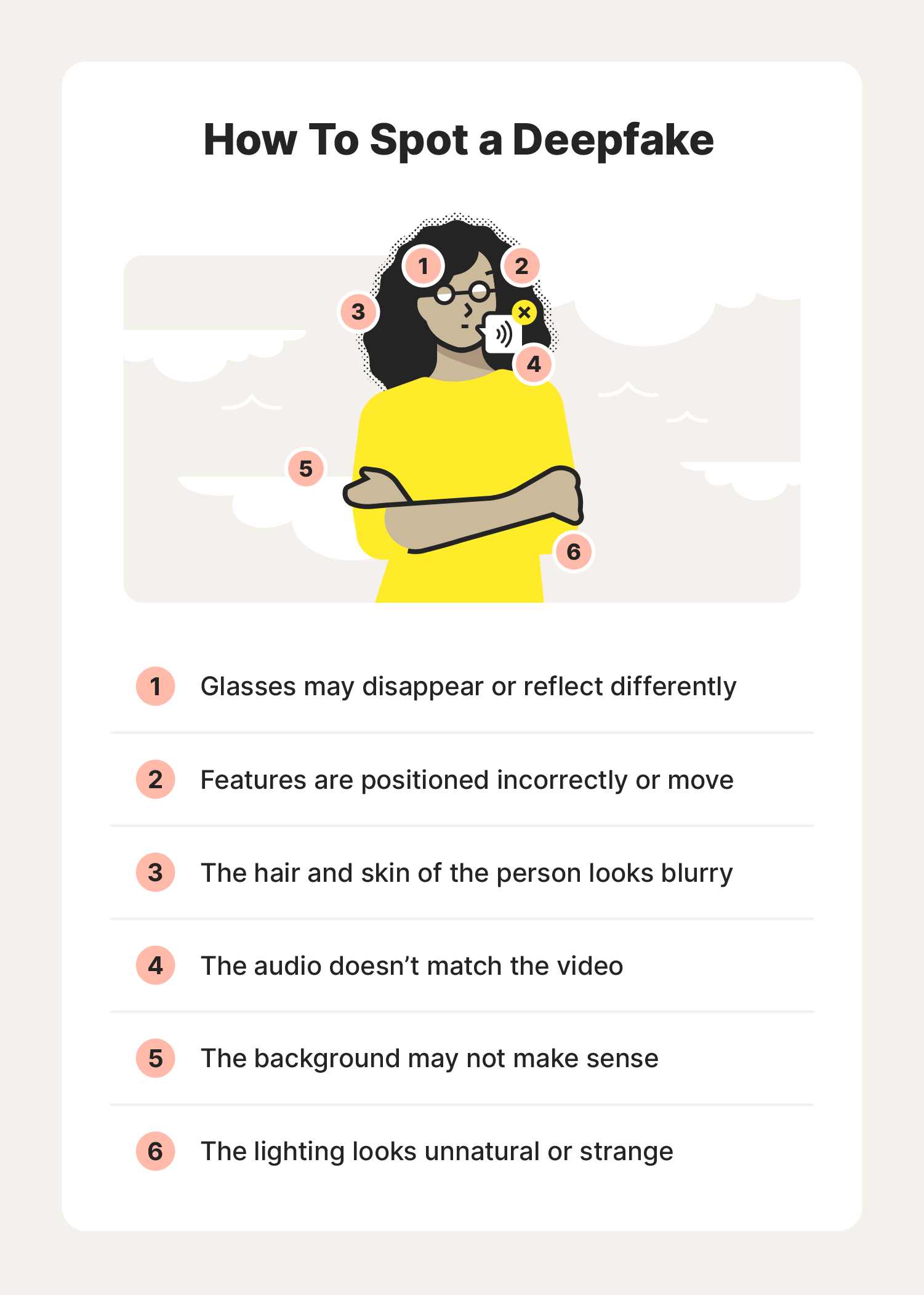
Help your child identify potential deepfakes by looking for:
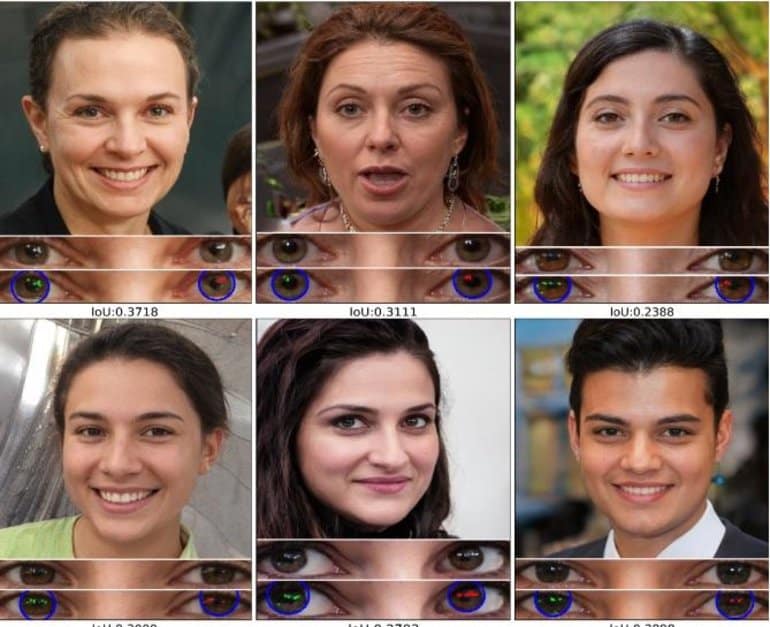
- Unnatural blinking or eye movements
- Blurry edges around the face
- Inconsistent lighting or shadows
- Audio that doesn't quite match lip movements
- Something that seems "too perfect" or "too outrageous"
For a detailed breakdown, see our article on 5 Clear Signs of a Deepfake.
High School (Ages 15-18): Advanced Media Literacy
Teenagers need to understand deepfakes in the context of broader issues: misinformation, digital consent, legal consequences, and their own digital footprint.
Key Concepts to Introduce
- Legal implications - Creating or sharing certain types of deepfakes can be illegal, with serious consequences including criminal charges.
- Consent and ethics - Using someone's likeness without permission is a violation of their rights, even if the technology makes it easy.
- The "liar's dividend" - When deepfakes become common, people can dismiss real evidence as fake, which undermines truth itself.
- Career and reputation - A deepfake scandal can follow someone for years, affecting college applications and job prospects.
Conversation Starters for Teens
- "What's your take on the ethics of deepfakes? Where do you think the line should be drawn?"
- "If you discovered that a viral political video was actually a deepfake, would you say something? How?"
- "How do you think deepfakes might affect your generation's relationship with truth and trust?"
Real-World Case Studies to Discuss
Share age-appropriate news stories about deepfakes to make the threat tangible:
- Election misinformation campaigns
- Celebrities targeted by non-consensual deepfakes
- Financial fraud using voice cloning (like the $25 million deepfake fraud case)
Empowering Action
Encourage your teenager to:
- Use verification tools like VerifyReal.ai before sharing suspicious content
- Report deepfakes they encounter on social media platforms
- Advocate for media literacy education at their school
- Protect their own digital footprint by being mindful of what photos and videos they share publicly
Warning Signs Your Child May Have Encountered Harmful Deepfakes
Sometimes children won't tell you directly that they've seen disturbing content. Watch for these behavioral changes:
Emotional Warning Signs
- Sudden reluctance to use devices or go online
- Anxiety or distress after using their phone or computer
- Withdrawal from friends or social activities
- Unexplained anger or mood swings
- Reluctance to discuss what they do online
Behavioral Warning Signs
- Clearing browser history frequently
- Switching screens quickly when you walk by
- Changes in sleep patterns
- Decline in academic performance
- New secrecy about online friendships
What to Do If You Notice These Signs
- Approach with empathy, not accusation - "I've noticed you seem stressed lately. Is there anything happening online that's bothering you?"
- Listen without judgment - Your child needs to feel safe telling you difficult things.
- Don't overreact - An extreme response may make them less likely to come to you in the future.
- Document if necessary - If your child has been targeted by a deepfake, save evidence before reporting.
- Seek professional help if needed - A counselor experienced with digital trauma can be invaluable.
Building Long-Term Media Literacy
Rather than a single conversation, media literacy should be an ongoing dialogue woven into daily life.
Daily Habits That Build Critical Thinking
- Question together - When watching news or scrolling social media together, ask: "How do we know this is true?"
- Model skepticism - Let your children see you fact-checking before sharing content.
- Celebrate mistakes - When you or your child falls for misinformation, treat it as a learning opportunity, not a failure.
- Discuss source quality - Talk about why some sources are more trustworthy than others.
Recommended Resources for Families
| Resource | Description | Best For |
|---|---|---|
| Common Sense Media | Age-based reviews and digital citizenship curriculum | All ages |
| MediaWise | Fact-checking skills for teens | High school |
| VerifyReal.ai | Free instant image verification | All ages |
| Be Internet Awesome (Google) | Interactive online safety games | Elementary |
Practical Safety Measures
Technical Controls
While conversations are essential, technical safeguards provide an additional layer of protection:
For Younger Children:
- Use parental control software appropriate for their age
- Enable SafeSearch on browsers
- Review apps before installation
- Set up family sharing to monitor app downloads
For Teenagers:
- Discuss rather than dictate—collaborate on reasonable boundaries
- Enable privacy settings on social media accounts together
- Teach them to limit the photos and videos they share publicly
- Introduce them to image verification tools
Family Media Agreement
Consider creating a family agreement that includes:
- Expectations for online behavior
- Commitment to open communication about online experiences
- Agreement to verify before sharing sensational content
- Consequences for violating trust (focused on learning, not punishment)
What to Do If Your Child Is Targeted
If your child becomes the victim of a deepfake—whether through bullying, harassment, or another form of abuse—take these steps:
- Support your child emotionally - Reassure them this is not their fault
- Document everything - Screenshots, URLs, dates, and any identifying information about the creator
- Report to platforms - Most social media platforms have policies against deepfakes and non-consensual imagery
- Contact school administration - If classmates are involved
- Consider law enforcement - Many jurisdictions now have laws specifically addressing deepfakes, especially those involving minors
- Seek legal advice if needed - An attorney can advise on options for removal and potential civil action
- Connect with support organizations - Groups like the Cyber Civil Rights Initiative offer resources for victims
The Conversation Continues
Talking to your children about deepfakes isn't a one-time event—it's an ongoing conversation that will evolve as they grow and as the technology changes. The goal isn't to make your children afraid of the internet, but to empower them with the knowledge and skills to navigate it safely.
Remember: you don't need to have all the answers. What matters most is that your children know they can come to you with questions and concerns without fear of judgment or punishment.
Key Takeaways
- Start early with age-appropriate conversations about digital literacy
- Build critical thinking skills through daily practice and open dialogue
- Watch for warning signs that your child may have encountered harmful content
- Use technical safeguards as one part of a comprehensive approach
- Keep the conversation going as your child grows and technology evolves
The digital world your children are inheriting is complex and sometimes challenging. But with your guidance, they can become savvy, responsible digital citizens who can distinguish fact from fiction and protect themselves and others from the harms of synthetic media.
Want to practice spotting deepfakes together? Try VerifyReal.ai as a family—upload any image and get instant results showing whether it's authentic, edited, or AI-generated. It's a great way to make media literacy tangible and interactive.
Related Articles
- The Complete Guide to Deepfake Detection
- 5 Clear Signs of a Deepfake (And How to Spot Them)
- The Legal Status of Deepfakes: What You Need to Know in 2026
- Case Study: The $25 Million Deepfake Fraud
References
[1] European Parliament. (2025, July). Children and deepfakes. EPRS Briefing.
[2] UNESCO. (2025, October). Deepfakes and the crisis of knowing.
[3] Common Sense Media. (2026). Digital Citizenship Curriculum.
[4] Cyberbullying Research Center. (2025). Deepfakes and Youth: Risks and Prevention.
Have questions about keeping your family safe from deepfakes? Contact us at support@verifyreal.ai